
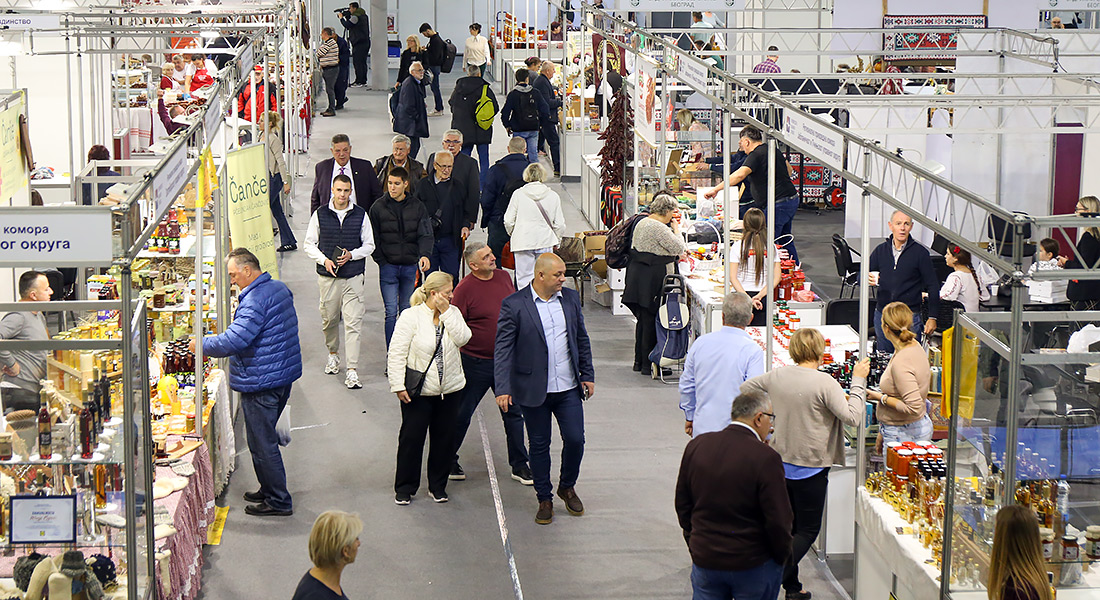
The jubilee 20th Fair of Ethnic Food and Drinks has solemnly opened at the Belgrade Fair—a specialized manifestation showcasing artisanal treasures that safeguard the rich gastronomic heritage of Serbia and the wider region, while vividly demonstrating that time-honored food and beverages command a vital, enduring place in today’s modern marketplace.
From November 12 to 15, 2026, Hall 2 of the Belgrade Fair will transform into a vibrant crossroads of tradition and trade, bringing together devoted producers, discerning buyers, distributors, and true connoisseurs of authentic, unforgettable flavors.
At this year’s fair, more than 300 producers of traditional food products are showcasing their goods on their own booths, as well as on joint stands organized by the Chamber of Commerce and Industry of Serbia and its regional branches, the Cooperative Union of Serbia and Belgrade, city administrations, and associations.
The opening ceremony commenced with a performance of the traditional folk song “Anđelin devojče” by the singing group Kosovke from the central part of Kosovo and Metohija. Afterward, following tradition, toastmaster Dragiša Simić delivered a toast to life, love, brotherly harmony, and childbirth.
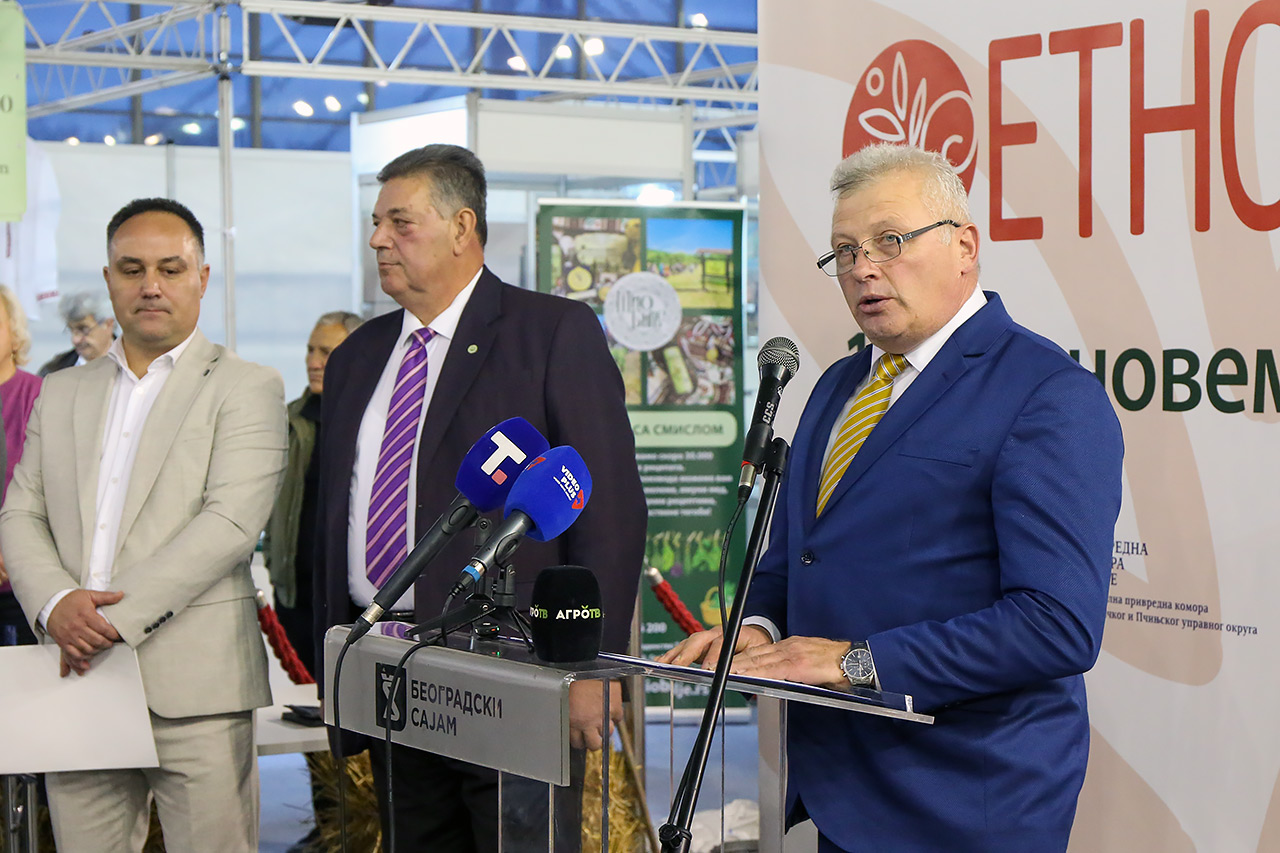
The manifestation was opened by Željko Radošević, State Secretary at the Ministry of Agriculture, Forestry and Water Management, which is once again the patron of the Fair of Ethnic Food and Drinks.
He emphasized that 20 years of the manifestation confirms its significance in promoting domestic products, preserving traditional production methods, and connecting our producers with the market.
“Serbia has a rich agricultural heritage, and almost every region is recognizable by its unique flavors and specialties. Precisely these products, created thanks to the knowledge, experience, and dedication of our hosts, represent a value that we must preserve and develop.”
“As in previous years, the Ministry of Agriculture, Forestry and Water Management is once again providing support to producers of traditional agricultural products by co-financing part of the rental costs for exhibition space at joint booths,” Radošević said, adding that special importance is attached to products with a protected geographical indication that are part of our national identity and rich agricultural heritage, and that great potential is recognized in organic production, for whose products there is strong interest in both domestic and foreign markets.
Cvijan Mekić, President of the Council of the Fair of Ethnic Food and Drinks, said that an event unique in our country, as well as the largest of its kind and renowned beyond our borders, is beginning.
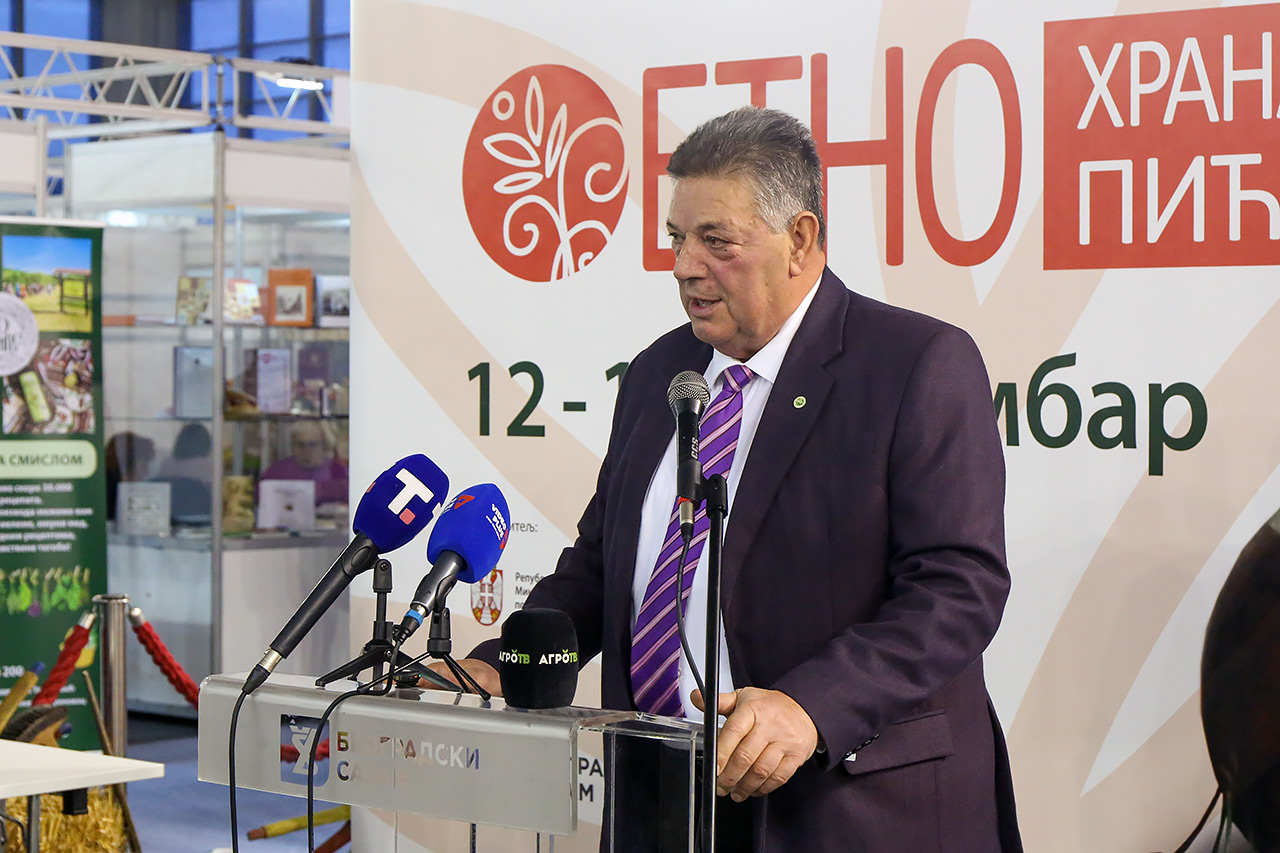
“This fair has reached its culmination and peak, and today we always talk about the finalization of products; we do not sell raw materials, rather we finalize them to a higher stage of processing, and this is precisely what can be seen at the fair today,” Mekić said, thanking all producers and exhibitors at the fair on behalf of the Council of the Fair of Ethnic Food and Drinks for the high-quality cooperation nurtured with them, noting that the products at the fair are pleasing to the eye while quality is taken for granted.
Starting this year, the host of the fair has been reintroduced, and in this jubilee edition of the fair, it is the City of Leskovac and the Chamber of Commerce of Leskovac, while on Saturday a handover is scheduled to the next host—the Cooperative Union of Serbia.
On behalf of the host of this year’s manifestation—the Regional Chamber of Commerce of the Jablanica and Pčinja Administrative Districts—Milan Petković, Director of the Association “Leskovački ajvar,” addressed the attendees.
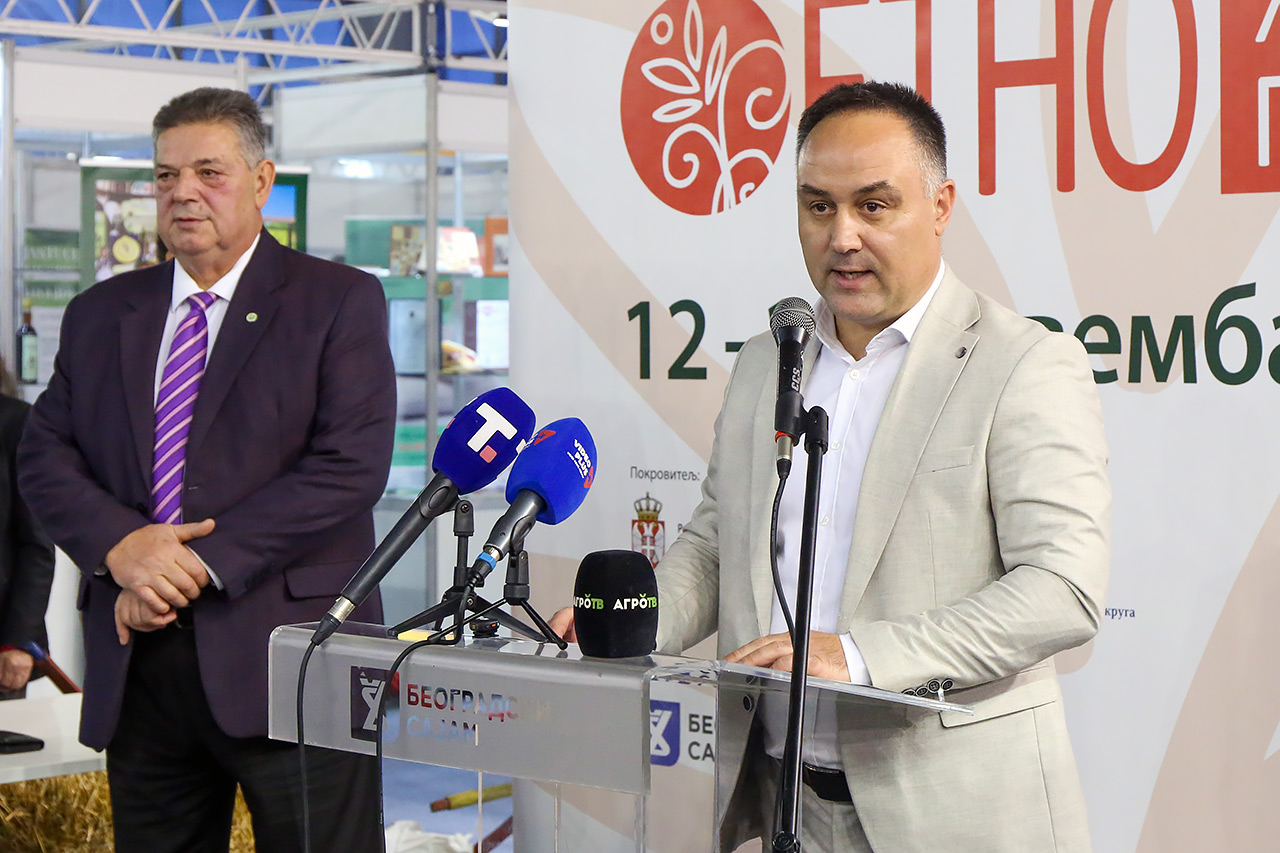
He said that this fair is not merely a presentation of traditional products, but much more than that.
“Ethnic food and drinks represent a part of our identity. Woven into every product are stories of our climate, family recipes, customs, and craftsmanship passed down from generation to generation. Special value is given to this fair by its international character, as it allows us to get to know the richness of different traditions, while also presenting the finest things our country has to offer.”
“May this jubilee fair be yet another confirmation that tradition is not just a memory of the past, but a value that we preserve, nurture, and leave to future generations,” Petković stated.
SERVICE INFORMATION
Opening hours of the 20th Fair of Ethnic Food and Drinks: from 10:00 AM to 7:00 PM
Ticket prices: An individual ticket is 800 RSD, for group visits (minimum 20 people/students) 500 RSD, a group ticket for students is 400 RSD, and a family ticket is 1,000 RSD.
Car parking: 300 RSD per hour
Additional information can be found at www.etnohip.rs
Organized by the Chamber of Commerce and Industry of Serbia, producers from Belgrade, Požarevac, Valjevo, Leskovac, Užice, Kragujevac, Pančevo, Kruševac, Kraljevo, Sremska Mitrovica, Zaječar, Zrenjanin, Kučevo, and other cities will participate.
The Cooperative Union of Serbia is participating with a large number of exhibitors and brings the diversity of domestic production into one place, from beer to cheeses, kajmak, and more.
Lelić Monastery and Hopovo Monastery will present honey products and rakija, while the Women’s Association will present a traditional Serbian pastry specific in its method of preparation—scraped pogača (strugana pogača).
The Regional Chamber of Valjevo, alongside its popular cured meat products, will also offer visitors homemade, natural cosmetics; the Municipality of Mladenovac, among other producers, is presenting the Granice Dairy; and visitors at the fair will also be able to taste pesto sauces with microgreens and learn about their culinary applications.
Lending a rich international dimension to this year’s exhibition are guest participants from Republika Srpska, Bosnia and Herzegovina, and Romania.